
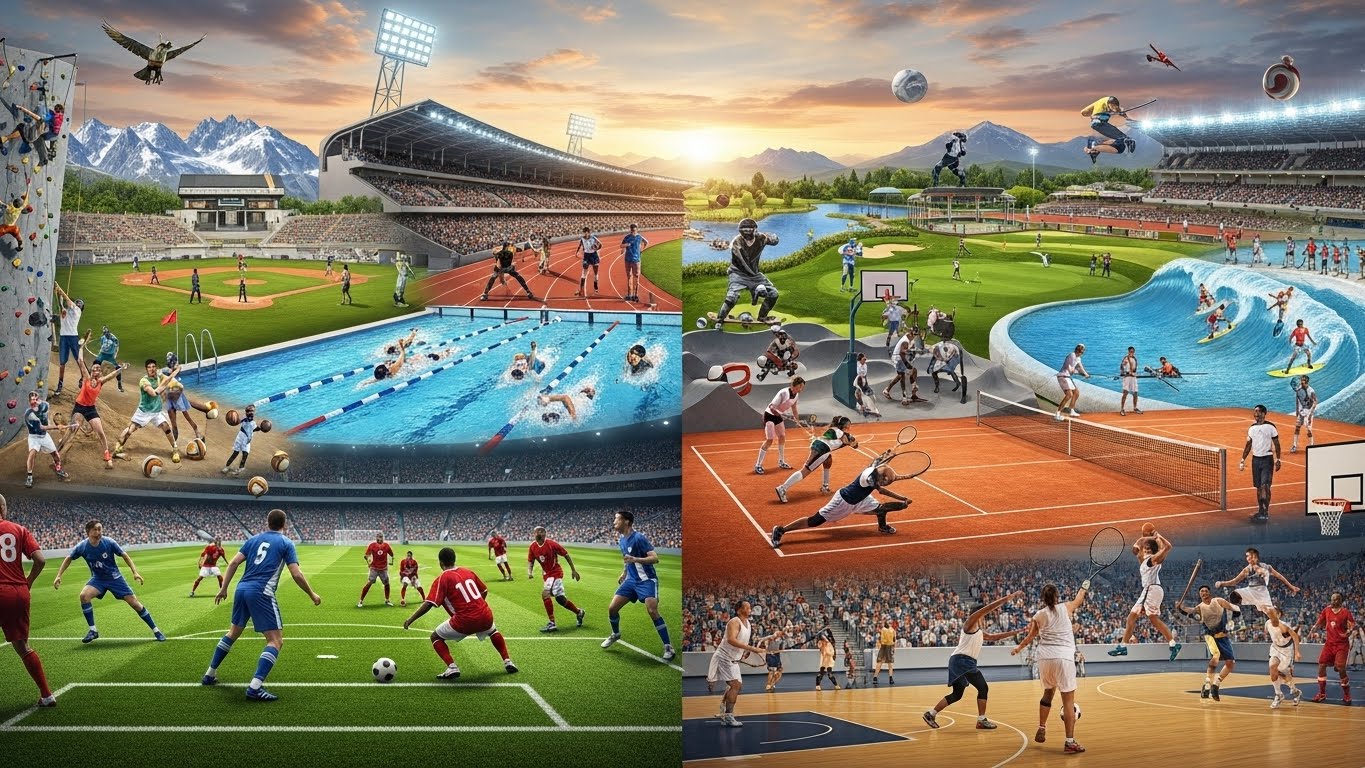
Sports have always been an integral part of human culture, serving as a source of entertainment, physical exercise, and a way to foster community spirit. Whether it’s the ancient Olympic Games or the modern-day World Cup, sports bring people together across borders, transcending language, culture, and even politics. The evolution of sports has mirrored society’s growth, from simple village games to global spectacles that can unite millions of fans. In this post, we will explore the dynamic history of sports, how they’ve evolved, and where they are headed in the future.
The Origins of Sports: From Ancient Games to Organized Competitions
The history of sports dates back to ancient civilizations. Evidence of sporting events can be found in the earliest known cultures, with records of athletic competitions from ancient Egypt, Mesopotamia, China, and Greece. The ancient Greeks, in particular, made significant contributions to the development of modern sports. The Olympic Games, first held in 776 BC, are perhaps the most iconic legacy of ancient Greek sports. These games were dedicated to the god Zeus and were a means of showcasing athletic prowess and encouraging peace among Greek city-states.
In other ancient civilizations, sports were often tied to military training or religious ceremonies. In China, martial arts were practiced for both self-defense and spiritual purposes, while in Rome, gladiatorial combat was both a form of entertainment and a symbol of power. These early forms of sports were often brutal and lacked the structure and rules seen in modern competitions.
As societies progressed, the need for organized competitions became more apparent. In medieval Europe, tournaments like jousting became popular among knights, while in Asia, archery and horse-riding competitions were held. However, it wasn’t until the 19th century, with the rise of industrialization and urbanization, that sports began to take their modern forms.
The Birth of Modern Sports: Standardizing the Rules
The 19th century saw the creation of some of the most well-known sports we enjoy today. With the advent of the Industrial Revolution, there was a greater emphasis on physical fitness, and sports became more organized and standardized. In England, football (soccer) evolved from a chaotic series of village games into a more structured sport, with the formation of the Football Association in 1863, which codified the rules of the game.
In the United States, the late 19th century saw the rise of baseball, American football, and basketball. Each of these sports grew out of different cultural contexts—baseball originated from bat-and-ball games played in Britain, while American football was a more aggressive variation of rugby. Basketball, created in 1891 by Dr. James Naismith, was an entirely new sport designed to keep students active during the winter months.
The standardization of rules in these and other sports was a crucial step in their global expansion. As teams and leagues grew in size and complexity, governing bodies such as FIFA (for football) and the IOC (International Olympic Committee) were formed to create universal guidelines, establish fair play, and ensure the integrity of the competitions.
The Commercialization of Sports: Becoming a Business
As sports became more popular, they also became big business. The commercialization of sports began in the early 20th century, with broadcasting deals, ticket sales, and sponsorships providing new revenue streams for teams, leagues, and athletes. The rise of radio and television in the mid-20th century played a pivotal role in bringing sports into homes worldwide, making them accessible to millions of fans.
One of the most significant events in the commercialization of sports was the development of the Super Bowl in American football. The NFL saw an opportunity to create a spectacle that would captivate the nation, leading to the creation of the Super Bowl in 1967. The game has since become a global cultural event, attracting not only sports fans but also viewers who tune in for the halftime shows and commercials.
In the world of football (soccer), the English Premier League, La Liga in Spain, and other top-tier leagues became brands in themselves. Global sponsorship deals, merchandise sales, and broadcasting rights became major sources of income, changing the landscape of sports economics forever. With the rise of billionaire investors and media moguls, sports clubs transformed from local institutions to global powerhouses with far-reaching influence.
Technology and Innovation in Sports: The Role of Science and Data
Technology has had a profound impact on the evolution of sports, both on and off the field. Innovations in equipment, training methods, and analytics have led to new records, better performances, and even new sports. In terms of equipment, advancements in materials science have led to lighter, stronger, and more efficient gear, such as carbon fiber bicycles, aerodynamic swimming suits, and advanced footwear that improve performance.
On the training side, sports science and physiology have played a key role in enhancing athletes’ physical capabilities. The use of data analytics, injury prevention techniques, and biomechanical assessments has helped athletes push the boundaries of human performance. Many professional teams and individual athletes now rely on data-driven training regimens that use heart rate monitors, GPS tracking, and motion sensors to improve efficiency and outcomes.
The role of video technology has also transformed the way sports are watched and played. VAR (Video Assistant Referee) in football and Hawk-Eye technology in tennis are prime examples of how technology is used to ensure fair play. These technologies help referees make more accurate decisions, reducing the likelihood of human error.
The future of sports technology looks even more promising, with virtual reality (VR) and augmented reality (AR) offering immersive experiences for both players and fans. Athletes may use VR simulations for training, while fans could enjoy 360-degree views of live games from the comfort of their homes. Additionally, wearable technology could provide fans with real-time data on their favorite athletes, adding a new layer of engagement to the viewing experience.
The Globalization of Sports: Bringing the World Together
In the past century, sports have become a truly global phenomenon. Major events like the FIFA World Cup, the Summer Olympics, and the NBA Finals attract audiences from all corners of the world. The rise of international competitions has helped to foster cross-cultural exchange and create a sense of global unity, as people from different countries and backgrounds come together to support their teams and athletes.
In particular, sports have become a tool for diplomacy and peacebuilding. The “Ping-Pong Diplomacy” between the United States and China in the 1970s is a famous example of how sports can be used to bridge political divides. More recently, the success of global sporting icons such as Serena Williams, Lionel Messi, and Usain Bolt has transcended national borders and helped to inspire people from all walks of life.
The rise of international sports leagues, such as the English Premier League and the NBA, has further globalized sports by attracting talent from across the globe. Players from countries like Brazil, Argentina, Nigeria, and France compete in leagues far from their homes, enriching the game with diverse styles and skills.
The ability to watch games from anywhere in the world, thanks to satellite TV, streaming platforms, and social media, has further contributed to the globalization of sports. Today, fans can follow their favorite teams and players regardless of geographic location, creating a truly interconnected sports community.
Women in Sports: Breaking Barriers and Creating Change
While sports have historically been male-dominated, the past few decades have seen significant strides in gender equality. Female athletes have fought hard to overcome societal barriers and achieve recognition in sports that were once closed to them. Today, women compete at the highest levels in virtually every sport, from football and basketball to tennis and athletics.
The rise of women’s sports leagues, such as the WNBA in basketball and the Women’s Super League in football, has provided female athletes with a platform to showcase their talent and inspire future generations. The success of athletes like Serena Williams, Simone Biles, and Megan Rapinoe has further highlighted the immense contributions women have made to the sports world.
However, challenges remain. Female athletes often face disparities in pay, sponsorship, and media coverage compared to their male counterparts. Despite this, the momentum is undeniable, and the push for greater gender equality in sports will continue to shape the future of athletics.
The Future of Sports: Evolving Trends and New Frontiers
The future of sports is poised to be just as transformative as its past. Technological advancements will continue to play a significant role, both in terms of how the games are played and how fans experience them. Sports will likely become even more immersive, with VR and AR offering fans the ability to experience games in entirely new ways.
Additionally, there is growing interest in alternative sports and eSports. Video gaming competitions have already become a massive industry, with tournaments drawing millions of viewers worldwide. As eSports continue to gain legitimacy as a form of competition, they could become as significant as traditional sports in terms of both fan base and revenue.
The growing focus on health and fitness will also continue to influence the sports world, with an increased emphasis on mental wellness, injury prevention, and sustainable practices. Environmental concerns are also likely to impact sports, as stadiums, events, and training centers adopt more eco-friendly solutions to reduce their carbon footprint.
Conclusion: The Ever-Expanding Universe of Sports
The world of sports has come a long way from its humble beginnings. From ancient tribal competitions to modern-day mega-events, sports have evolved into a global cultural force that unites people from all walks of life. As we look to the future, technology, globalization, and social progress will continue to shape the sports landscape, creating new opportunities for athletes and fans alike. The passion, dedication, and skill that define sports will always be central to the experience, ensuring that sports remain a key element of human life for generations to come.